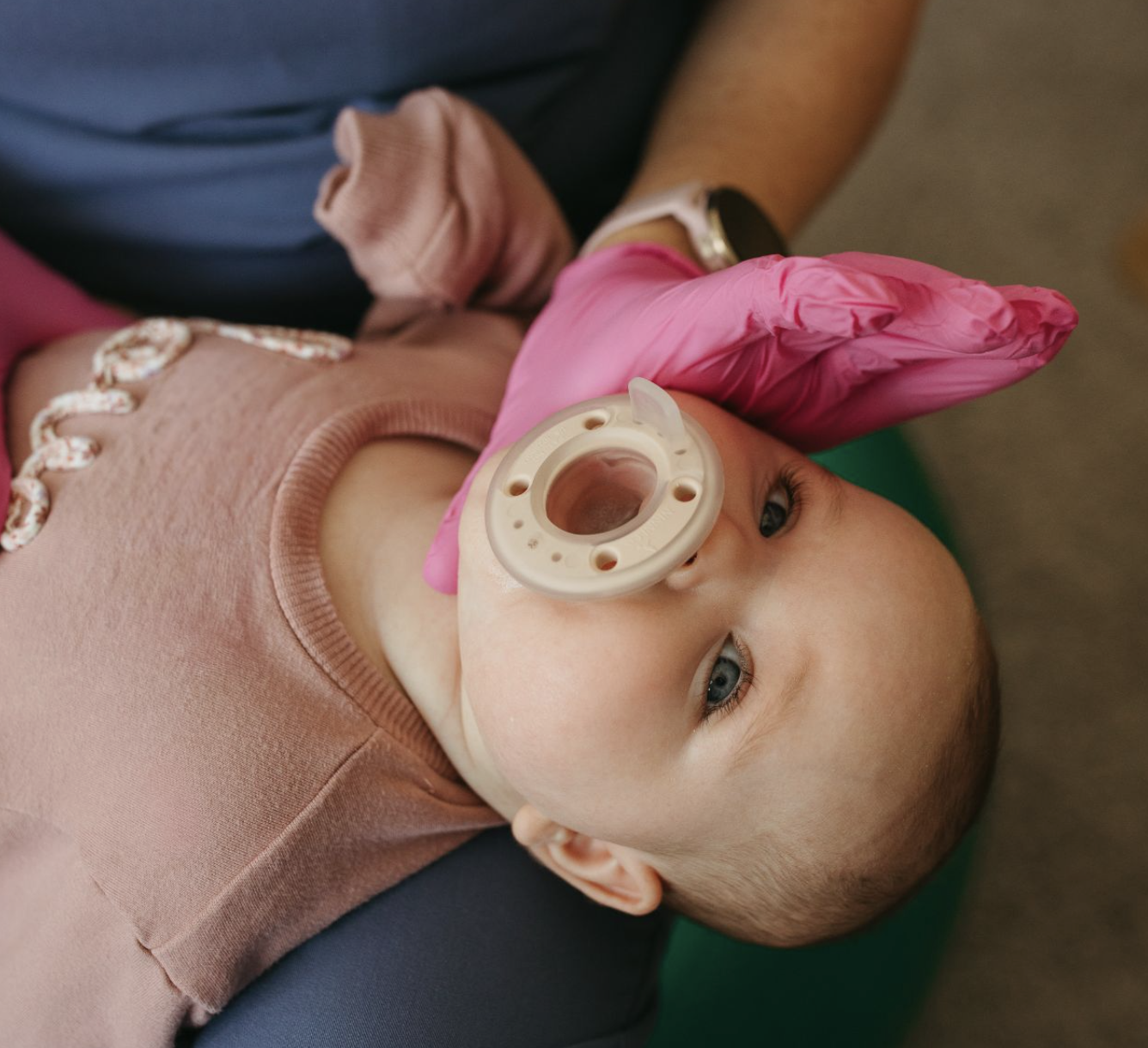
Have you been told your baby might have a tongue-tie or lip tie, you’ve probably heard a lot of conflicting information. Some families are told a release (frenectomy) will fix everything overnight, while others are left wondering if it will help.
The truth is a tongue-tie is rarely just about the tissue. It's about how the tongue, body, and nervous system work together to support feeding and development.
As a Pediatric Physical Therapist, I often see babies struggling with symptoms related to tongue and/or lip ties. And while a release can be an important part of treatment, infant physical therapy often plays a critical role both before and after the procedure.
Why? Let’s talk about it!
How Tongue-Tie Symptoms Often Present in Babies
Many parents assume tongue-tie only affects breastfeeding, but in reality it can affect much more than feeding.
Some of the most common patterns I see in babies with a tongue-tie include:
Significant body tension
Feeding difficulties and/or a shallow latch, preference to nursing on one side
Excessive gas and/or reflux-like symptoms
Head turn preference or tightness through the neck
Open mouth posture at rest (breathing with their mouth open)
These symptoms present because feeding is not just about the tongue, it’s a whole-body activity involving posture, muscle tone, coordination, and nervous system regulation.
When tension patterns are present in the body, they can limit how the tongue is able to move and function.
How Infant Physical Therapy Helps
Infant physical therapy focuses on improving the foundations that feeding depends on.
Reducing Body Tension: Babies with tongue-ties frequently develop compensation patterns in the neck, jaw, and upper body. By releasing this tension, we help to create space in the body, allowing for the mobility that is needed for comfortable and efficient feeding.
Improving Oral Motor: (use and coordination of the muscles in the lips, tongue, jaw, and cheeks): The tongue jaw, and surrounding muscles must have the necessary strength, endurance and coordination to effectively feed,
Encouraging Improved Mobility & Positioning: Feeding mechanics improve dramatically when babies have improved control and freedom of movement throughout their body.
Nervous System Regulation: Babies adapt, learn, and feed best when they feel safe, calm, and regulated.
Why Should Babies See a PT Before a Tongue-Tie Release?
In my professional opinion, any family considering a tongue-tie release should see a physical therapist (with extensive training in this area) for services before and after the procedure.
Here’s why.
Before a Release
Physical Therapy can:
Reduce body tension
Improve feeding mechanics and oral motor function
Help determine whether restrictions are coming from the tongue, the body, or a combination of both
Prepare both the baby and parents for the procedure and aftercare
Oftentimes, babies make significant progress even before a release procedure is performed.
After a Release-This is where therapy becomes incredibly important.
A release changes the anatomy, but babies still need to learn how to use their tongue without the compensatory patterns they have learned to function with during development (the sucking reflex begins at 32 weeks). After the release, the tongue has more mobility and does not have the same tension patterns. The tongue will have to regain coordination, strength and endurance.
Physical Therapy will help with neuromuscular re-education, which simply means retraining the muscles so that the tongue can move and function the way it was intended, without compensation.
The Biggest Misconception About Tongue-Ties
…The tongue tie is a quick fix…
A tongue-tie release is not a quick fix.
While it can be an important step for some babies, optimal outcomes usually involve:
Preparation before the procedure
Support after the procedure
Addressing the whole body, not just the tongue
A multi-disciplinary team
When these pieces are in place, babies and parents often experience smoother and quicker changes.
When Should Parents Seek Support?
A painful or shallow latch
Excessive gas or reflux-like symptoms
Persistent body tension
Head turning preference
Head flattening
Clicking, fussiness at the breast/bottle, or popping on/off the breast/bottle
Difficulty settling and/or sleeping
Considering a tongue-tie release
Preparing for a procedure
Navigating feeding challenges
Support after a release
Please know that it is okay to seek support.
Parents know their babies best, and early support can make all the difference.
Supporting the Whole Baby
At Kristin Ewertz Physical Therapy, our goal is to support babies in developing the mobility, coordination, and regulation they need to thrive.
When the whole body works well together, feeding becomes easier, more comfortable, and more enjoyable for both baby and parent.
If you’re concerned about feeding, tongue mobility, or tension in your baby, early support can help set the foundation for a powerful and positive beginning.
Infant physical therapy services can help create the foundation needed for optimal outcomes.
Contact Kristin Ewertz Physical Therapy today to see how we can support both you and your baby.
Serving families in and around Wichita, KS